Fall is a transition season for Buy Here Pay Here dealerships. Summer routines end, school schedules return, seasonal jobs change, and holiday expenses begin to build. Customers may start driving more, taking different routes, working farther from home, or dealing with new financial pressure.
None of those changes automatically mean an account is becoming a problem. What they do show is that a BHPH portfolio is constantly changing.
An account that looked completely normal a month ago can look different today. The opportunity for dealers is having enough information to recognize those changes, understand what may be happening, and decide whether anything needs attention.
Fall can affect both customer finances and daily routines. A customer may take on a longer commute, pick up seasonal work, change jobs, move to a new area, or face additional household expenses as the holidays approach.
Those changes can influence both payment behavior and vehicle usage. For BHPH dealers, that makes context increasingly valuable as the year progresses.
The goal is not to treat every change like a warning sign. It is to have better information available when your team needs to understand an account, answer a question, or make a decision.
For years, the BHPH GPS conversation has centered around one question:
Where is the vehicle?
That question still matters, but it is no longer the only question dealers can answer.
A financed vehicle may be parked at the customer’s home every night while accumulating significantly more mileage than it did earlier in the year. It may begin traveling into new areas, taking longer trips, or showing activity that differs from its previous patterns.
That kind of information provides another layer of context.
Instead of only knowing where a vehicle is at one moment, dealers can begin to understand more about how that vehicle is being used and whether its activity has changed over time.
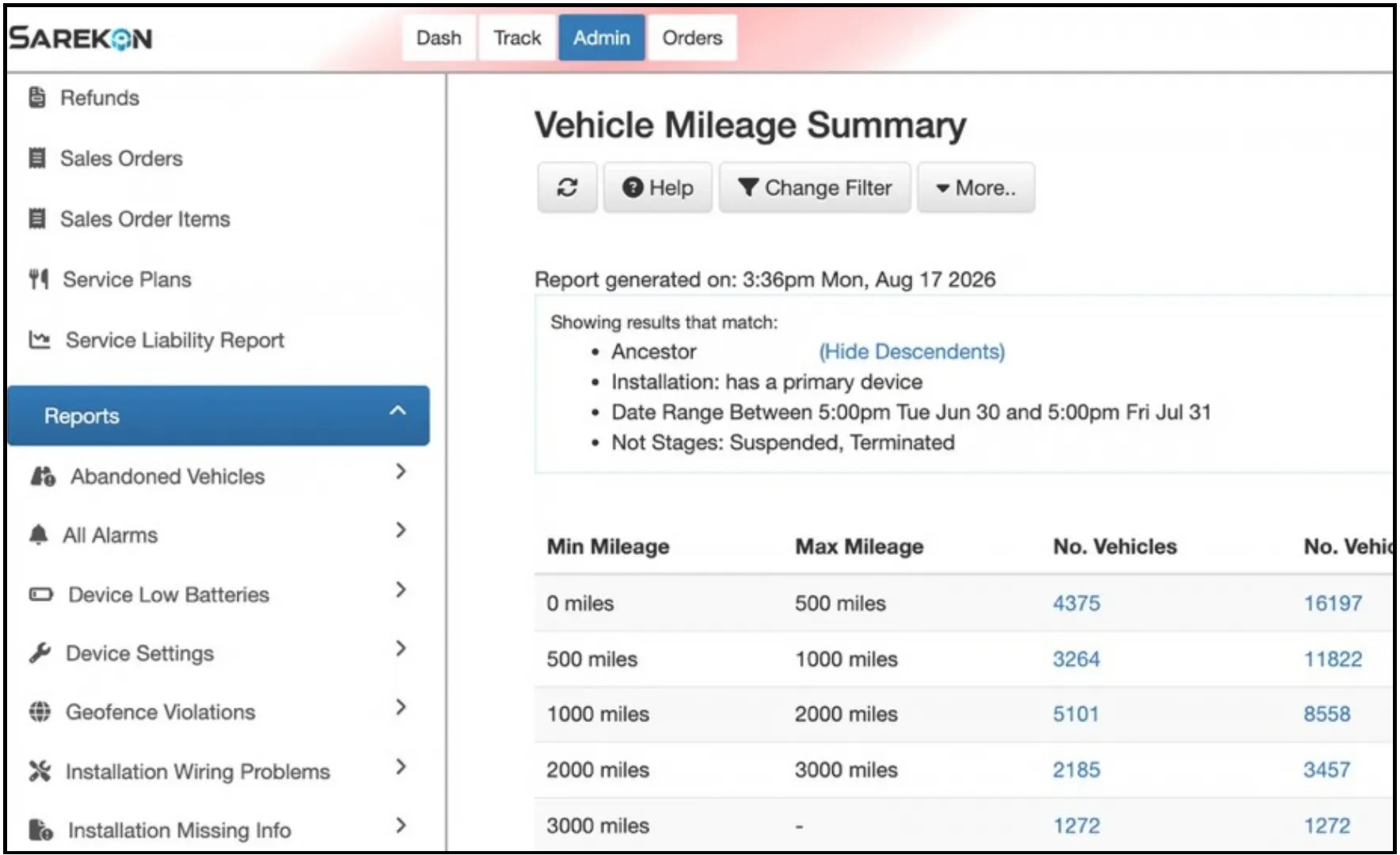
Mileage is one of the clearest examples of why dealers need more than a location point.
A longer commute, additional employment, frequent travel, rideshare activity, delivery work, or other changes in driving habits can add miles quickly. For a BHPH dealer, those additional miles may eventually affect wear, depreciation, reconditioning expenses, and collateral value.
Sarekon’s Mileage Alerts help dealers identify vehicles that exceed established mileage thresholds so higher usage can be surfaced sooner.
High mileage does not automatically mean there is a problem, and mileage information does not tell the dealership why those miles were driven. It simply gives your team another piece of information when reviewing the vehicle and account.
That is the value of seeing more than where the vehicle is today.
Current location tells you what is happening now. Historical activity helps your team understand what happened before it.
When an account needs attention, having recent vehicle history available can save employees from trying to reconstruct weeks or months of activity manually.
Instead of relying only on customer notes, phone calls, or a last known location, your team has additional information that can help provide context around the vehicle.
That can make everyday account management more efficient and give collections or recovery teams better information when they need to make a decision.
Basic GPS answers a location question. Connected Vehicle Intelligence helps BHPH dealers better understand what is happening across financed vehicles.
The questions become broader:
Location, mileage, history, alerts, vehicle activity, and other portfolio information become more valuable when they work together instead of living in separate places.
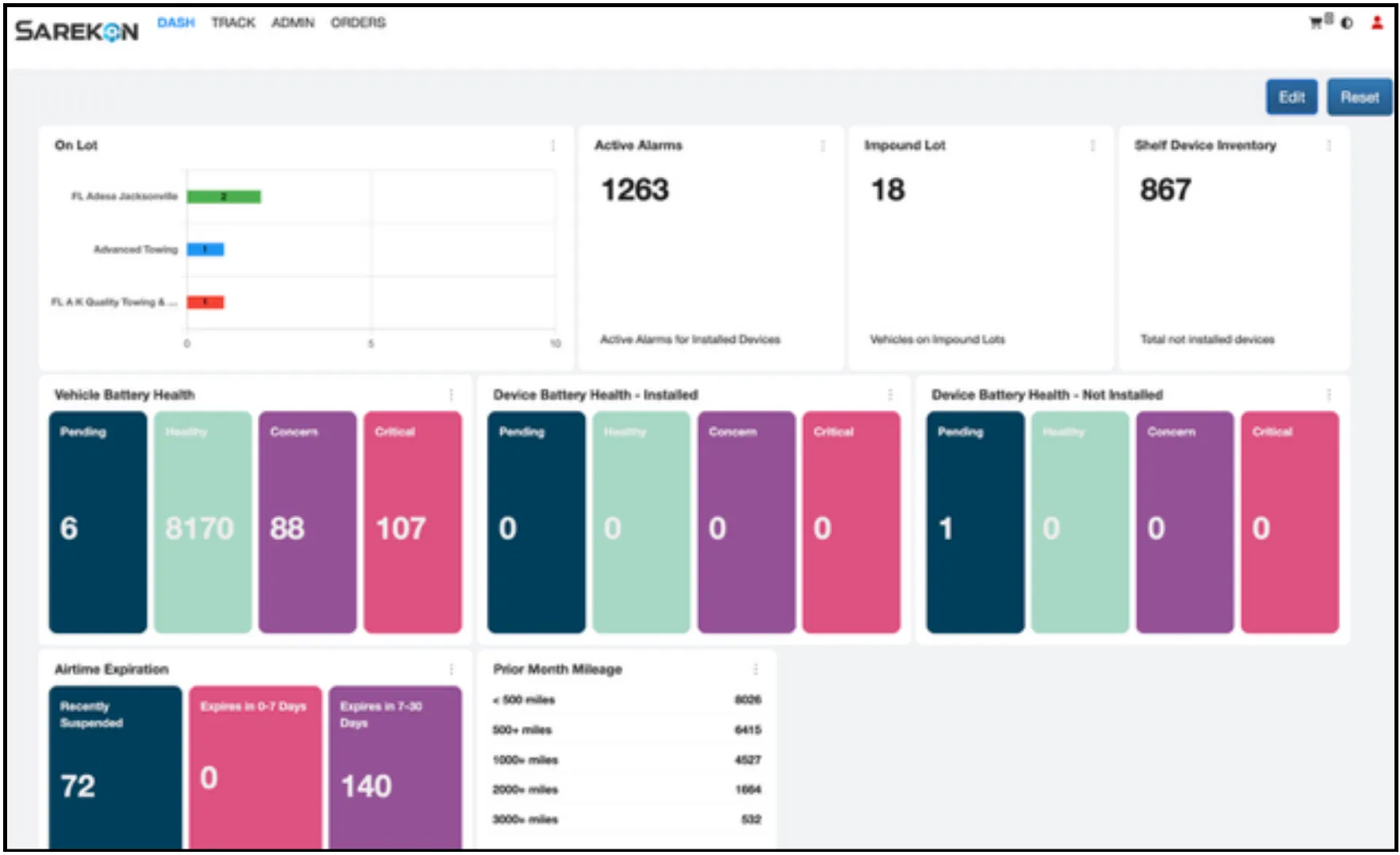
Sarekon’s BHPH Dashboard is one way that Connected Vehicle Intelligence becomes tangible for dealers. It brings important portfolio information into a clearer view, helping teams see what is happening across financed vehicles and identify where attention may be needed.
When the Dashboard works alongside tools such as Mileage Alerts, vehicle history, geo zones, impound information, and recovery tools, GPS becomes more than something your team uses when a vehicle goes missing.
It becomes part of how your dealership manages the portfolio every day.
For a dealership managing hundreds or thousands of financed vehicles, the challenge is not simply collecting more data.
It is making that information useful.
Your team should not have to search across multiple systems or manually review every account to understand what is happening. The value comes from bringing meaningful vehicle information together so employees can quickly get the context they need.
That may mean seeing that a vehicle’s mileage has increased. It may mean reviewing recent activity when a customer calls. It may mean understanding whether a vehicle has been moving normally before a collections conversation begins.
Connected Vehicle Intelligence gives dealers another source of information to support the decisions they are already making every day.
October is also when many dealerships begin looking ahead to 2027.
More inventory and more deals can mean more opportunity, but they also mean more financed vehicles to manage. As portfolios grow, visibility needs to scale with them.
That makes this a good time to look beyond whether GPS devices are simply installed and ask whether the information coming from those devices is actually helping your team operate more effectively.
Can your team quickly understand what is happening with a financed vehicle? Can it see meaningful changes without digging through multiple systems? Can it use vehicle information to support everyday portfolio decisions?
Those questions will become even more important as dealerships prepare for another year of growth.
Fall highlights how quickly customer routines and vehicle activity can change, but the bigger story extends well beyond the season.
BHPH dealers need technology that helps them understand more about the vehicles behind their accounts every day.
That is the value of Sarekon’s Connected Vehicle Intelligence.
It brings vehicle information together to help dealers see more, understand more, and make better informed decisions across the portfolio.
More visibility. Better decisions. Stronger portfolio protection.
See how Sarekon Connected Vehicle Intelligence can help your dealership prepare for 2027.
(888) 726-3511 | www.sarekon.com
For trailer dealers and businesses managing valuable assets, GPS tracking can provide an important layer of visibility and protection. But when every tracked trailer comes with another monthly service fee, expanding that protection across an entire inventory can quickly become expensive.
That creates an important question: How many of your trailers can you realistically afford to track?
Sarekon takes a different approach. With zero monthly GPS fees, businesses can make GPS practical across more trailers, expand visibility across their operation, and have location technology in place before they actually need it.
The real advantage is not simply paying less for GPS. It is being able to protect more.
Yes. Sarekon offers GPS solutions with zero monthly GPS fees, allowing businesses to protect more assets without adding another recurring service charge for every device.
That difference becomes increasingly important as inventory grows. A monthly fee may seem manageable on one trailer, but multiplied across dozens or hundreds of units, recurring costs can influence how broadly a business chooses to deploy GPS.
Removing that recurring expense gives trailer dealers and businesses more flexibility. Tracking can extend beyond only the newest or highest-value units to provide greater visibility across a larger portion of the operation.
Every trailer represents money invested in the business. Whether it is sitting on a dealership lot, stored at another location, in transit, or being used in the field, maintaining visibility to that asset matters.
The financial advantage of eliminating monthly fees isn’t only about reducing GPS expenses. It can make it practical to put tracking on more inventory. As a business grows, its GPS strategy can grow with it without recurring service costs increasing with every additional tracked trailer.
Theft recovery is an important reason to use GPS, but tracking provides value before a theft ever occurs.

Trailer inventory can be spread across dealership lots, storage areas, jobsites, customer locations, and other facilities. GPS gives businesses another source of location information to help stay connected to those assets, particularly when trailers regularly move between locations or spend long periods away from the people managing them.
If a trailer moves unexpectedly or disappears, having GPS already installed means the business isn’t starting from zero. Location information is already available to help determine where the asset is and support the appropriate response.
That is an important distinction: the time to add visibility is before you need it.
The financial impact of trailer theft can extend well beyond the replacement value of the trailer itself.
Depending on the business, a missing trailer can mean lost cargo, delayed deliveries, disrupted jobs, missed customer commitments, reduced productivity, and time spent trying to locate or replace the asset.
For a trailer dealer, missing inventory can mean a unit isn’t available when a customer is ready to buy. For a business using trailers operationally, losing access to one can affect scheduling, equipment availability, and revenue-producing work.
That is why trailer protection is more than a technology decision. It is about protecting the assets that keep the business moving.
When every GPS device carries a monthly cost, businesses naturally begin prioritizing which assets receive tracking. The most expensive trailers may get GPS while other inventory is left without the same visibility.
A different cost structure gives trailer dealers more flexibility to build a consistent strategy across their inventory instead of making the decision trailer by trailer.
For growing dealerships, that scalability matters. Adding inventory shouldn’t necessarily mean adding another recurring GPS expense at the same pace.
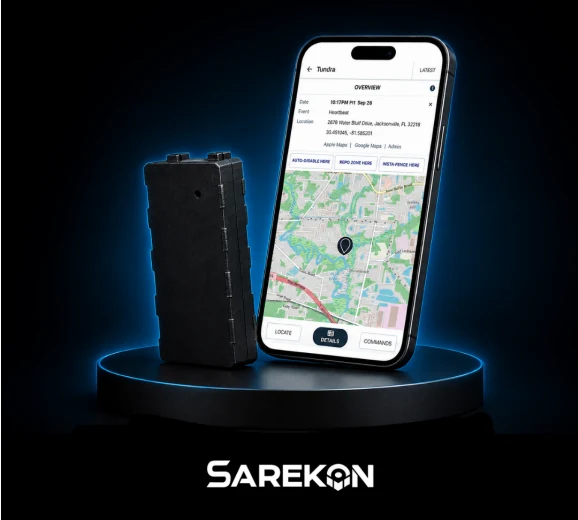
There isn’t one GPS device that fits every trailer or operation. Assets can differ in how they are powered, how frequently they move, where they’re stored, and how the GPS device needs to be installed.
Sarekon offers wired, wireless, and rechargeable GPS solutions, giving businesses flexibility when building their tracking strategy. A wired device may make sense when consistent power is available. Wireless devices provide greater flexibility for placement, while rechargeable options offer another solution when permanent wiring isn’t practical.
For businesses managing trailers, cargo, and heavy equipment, multiple hardware options make it easier to match the technology to the asset rather than forcing every application into the same setup.
Sarekon may be a newer name to some businesses in the trailer industry, but we aren’t new to GPS.
For 27 years, the Sarekon team has worked with GPS and telematics technology to help businesses secure and locate valuable assets. During that time, tracking technology has evolved across multiple generations of hardware, cellular connectivity, and software.
That experience matters when choosing the company behind the technology protecting your assets. Businesses need more than a GPS device. They need reliable technology, flexible solutions, and a provider with experience in asset location and protection.
Sarekon brings those decades of experience to the trailer, cargo, and heavy equipment markets with GPS solutions designed around what businesses actually need.
Your trailers, cargo, and equipment represent inventory, revenue, productivity, customer commitments, and money invested in your business.
The goal shouldn’t be to put GPS on only the assets you can justify paying another monthly fee for. It should be to create a tracking strategy that gives your business the visibility and protection it needs across more of its operation.
With wired, wireless, and rechargeable solutions backed by 27 years of GPS and telematics experience, Sarekon gives businesses a smarter way to expand that protection.
More visibility. More protection. Zero monthly GPS fees.
Ready to explore a smarter way to track your trailers, cargo, and equipment?
Visit www.sarekon.com or call (888) 726-3511 to learn more about Sarekon GPS solutions.
For Buy Here Pay Here dealers, a vehicle that suddenly becomes difficult to locate can create an immediate problem. The customer may not be responding, the vehicle may no longer be where expected, and the account may already need attention.
In many cases, the first thought is that the customer has skipped or recovery needs to begin. But sometimes the vehicle is not missing at all. It is already sitting in an impound lot.
That distinction matters.
While your team is trying to determine where the vehicle went, storage fees may already be increasing and employees may be spending valuable time making calls, reviewing account notes, contacting recovery partners, and checking possible locations.
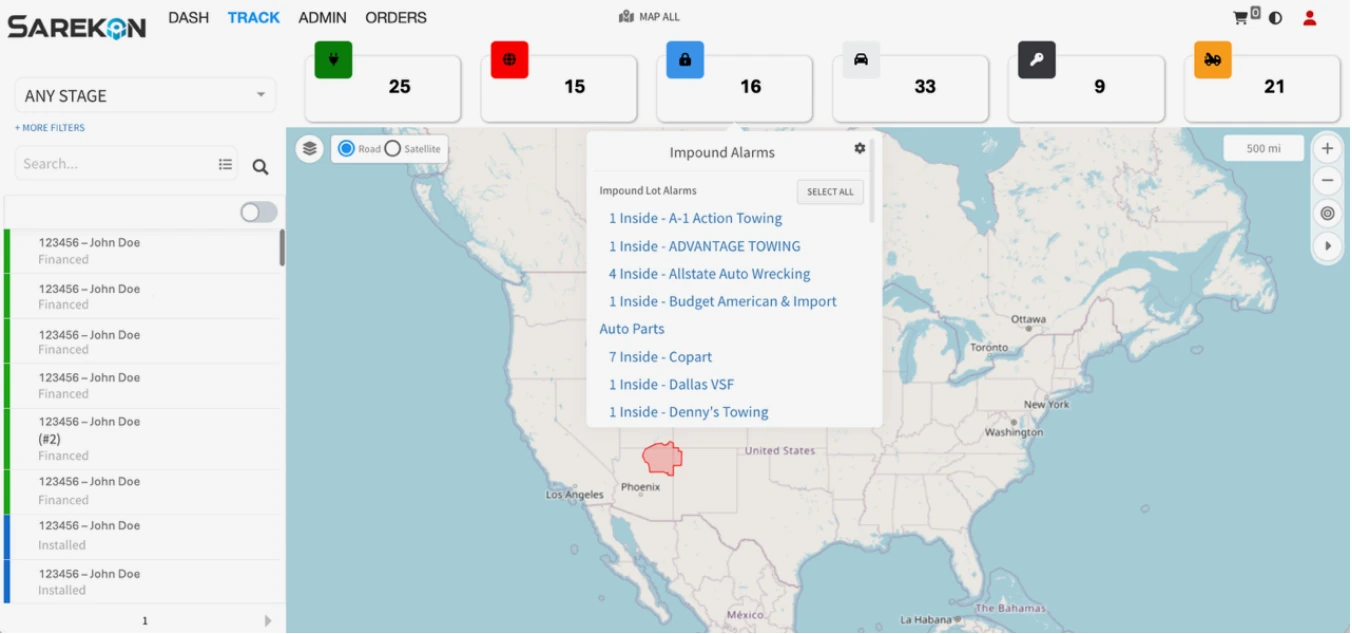
Sarekon helps reduce that uncertainty with access to an 18,000+ impound lot database, helping authorized dealers identify when tracked vehicles are detected at or near known impound locations.
The sooner your team knows what happened, the sooner it can decide what to do next.
A dealership may not always be notified when a financed vehicle is towed.
The customer may not call. Contact information may be outdated. The vehicle may have been impounded after an accident, parking violation, traffic stop, abandonment, or another situation that never reaches the dealership directly.
Without an alert, the dealership may spend hours trying to locate a vehicle that has already been found.
Impound lot alerts can help provide that information sooner. Instead of beginning with the question, “Where did the vehicle go?” your team may already know that it has entered a known impound location.
That can help reduce unnecessary searching and allow the dealership to review the account sooner.
For BHPH dealers, this is one of the most important reasons additional vehicle context matters.
A vehicle that is not where expected does not automatically mean the customer has skipped. It could have been stolen, involved in an accident, moved outside its normal area, stopped reporting, or been impounded.
Treating every missing vehicle like a skip can create unnecessary recovery activity and wasted time.
If your team knows the vehicle is already sitting in an impound lot, the entire situation changes. You can review the account, contact the customer if appropriate, understand the circumstances, and determine the next step with better information.
That helps collections and recovery teams spend less time guessing and more time making informed decisions.
Timing is important because impound costs can increase the longer a vehicle remains unclaimed.
Early notification gives the dealership an opportunity to investigate sooner before additional storage charges and recovery costs accumulate. It can also reduce the staff time spent calling local tow companies, reviewing multiple systems, or sending recovery partners to search for a vehicle that is already sitting in a known location.
Not every impounded vehicle requires the same response, but earlier information gives the dealership more options.
That can be especially valuable across a large portfolio where even small delays, repeated across multiple accounts, can create meaningful operational costs.
For BHPH dealers, strong vehicle visibility should go beyond simply answering, “Where is the vehicle?”
The greater value comes from understanding what is happening with the vehicle.
Unexpected movement, excessive mileage, loss of device communication, tamper activity, geo zone activity, and impound lot alerts can all provide important context around a financed asset.
That is part of Sarekon’s Connected Vehicle Intelligence approach.
Connected Vehicle Intelligence helps dealers move beyond basic location tracking by bringing together vehicle activity and alerts that can help teams recognize changes earlier and prioritize which accounts may need attention.
A vehicle accumulating unusual mileage may require a different conversation than one that has stopped reporting. A vehicle detected at an impound lot may require a different response than one that has traveled outside its normal area.
The more context your team has, the better prepared it is to make the right decision.
Sarekon gives BHPH dealers access to tools designed to provide greater visibility across financed vehicles, including:
Together, these tools help dealerships understand more than where a vehicle is. They help provide a clearer picture of what is happening across the portfolio.
That can make it easier to identify problems sooner, reduce unnecessary recovery activity, and give collections and recovery teams better information when time matters.
A vehicle sitting unnoticed in an impound lot can quickly become more expensive. Storage fees may increase, employees may spend hours searching, and recovery activity may begin before the dealership has the full picture.
Impound lot alerts help reduce that uncertainty.
For BHPH dealers managing hundreds or thousands of financed vehicles, knowing sooner can save time, reduce unnecessary costs, and make recovery workflows more efficient.
The goal is not simply to find a vehicle faster.
It is to give your team the information it needs to understand what happened and respond appropriately.
See how Sarekon’s Connected Vehicle Intelligence and 18,000+ impound lot database can help your team identify towed vehicles sooner, reduce unnecessary recovery activity, and make faster decisions across your portfolio.
Visit www.sarekon.com to learn more.
The final quarter of the year can put new pressure on a Buy Here Pay Here portfolio. Customer budgets change, holiday travel disrupts normal driving patterns, financed vehicles may move farther from home, and dealerships are trying to finish the year strong while staying on top of collections and recoveries.
September is a good time to take a closer look at the portfolio before Q4 begins.
The goal is not to assume every account is becoming a problem. It is to make sure your team can recognize important changes early and has the information needed to respond when an account does require attention.
Vehicle theft remains an important consideration for financed collateral. According to the National Insurance Crime Bureau, 659,880 vehicles were reported stolen nationwide in 2025, which equals roughly one stolen vehicle every 48 seconds. NICB also analyzed 129,843 stolen vehicles during the first quarter of 2026.
For BHPH dealers, a stolen vehicle is more than a theft statistic. It is financed collateral connected directly to portfolio performance.
Heading into Q4, ask how quickly your team could respond if a vehicle disappeared. Is current location information available? Are movement and tamper alerts being reviewed? Are recovery contacts current? Does your team know what to do when something looks unusual?
The faster you understand what happened, the better prepared you are to determine the next step.
Source: National Insurance Crime Bureau, 2025 Vehicle Theft Report and Q1 2026 Vehicle Theft Trend Report.
Customer affordability remains part of the BHPH picture. TransUnion reported that average monthly payments on used vehicles were 39.6% higher in Q2 2026 than in 2019, while serious auto delinquency remained elevated.
That does not mean every account is at risk. But changing household expenses, job situations, holiday spending, or other financial pressures can affect payment behavior quickly.
As Q4 approaches, review accounts already showing changes in payments, communication, or other activity that may deserve additional attention.
Source: TransUnion Q2 2026 Consumer Credit Industry Insights Report.
Knowing where a financed vehicle is remains important, but location does not tell the entire story.
A vehicle can be exactly where expected while accumulating significantly more mileage than anticipated. Long commutes, seasonal employment, rideshare activity, delivery work, frequent travel, and other high usage situations can all add miles quickly.
For a BHPH dealer, excessive mileage may mean accelerated wear, faster depreciation, higher reconditioning needs, and changes in collateral value.
Sarekon’s Mileage Alerts help dealers identify vehicles that exceed established mileage thresholds so unusual usage can be recognized sooner.
High mileage does not automatically mean there is a problem, and mileage data does not tell you why those miles were driven. It simply gives your team another piece of information to consider when reviewing the vehicle and account.
That is the value of seeing more than a location point.
One of the most practical things a BHPH dealership can do before Q4 is review vehicles that have stopped communicating or are reporting inconsistently.
If a device stops reporting and the issue is not discovered until the customer becomes delinquent, your team may begin the recovery process with outdated information.
Before Q4 begins, identify non-reporting devices, determine who is responsible for reviewing them, and make sure there is a clear process for handling communication issues.
The best time to discover a reporting problem is before you urgently need the vehicle’s location.
A vehicle that appears to be missing is not always a skip or theft. Sometimes it is already sitting in an impound lot.
Sarekon gives BHPH dealers access to an 18,000+ impound lot database, helping authorized teams identify when tracked vehicles are detected at or near known impound locations.
That can mean less time searching, better information for recovery decisions, and an opportunity to respond before storage fees continue to grow.
For more on this feature, read Why Tow Lot Alerts Can Save BHPH Dealers Time and Money.
Holiday travel, seasonal work, family visits, changing schedules, and other year end activity can take financed vehicles outside their normal routines.
That movement is not automatically a problem. What matters is having enough information to understand when something changes and determine whether it deserves attention.
Trip history, geo zones, movement alerts, and Locate On Demand can give your team additional context when an account becomes urgent instead of trying to reconstruct activity after the fact.
Managing a BHPH portfolio is not simply about knowing where vehicles are.
Dealers need to understand what is happening across the portfolio.
That is where Sarekon’s Connected Vehicle Intelligence comes in.
Mileage information, alerts, vehicle activity, location data, geo zones, impound lot information, and recovery tools become more valuable when they work together. Instead of viewing GPS solely as a tool used after something goes wrong, dealers can use vehicle information to recognize changes sooner and prioritize where attention may be needed.
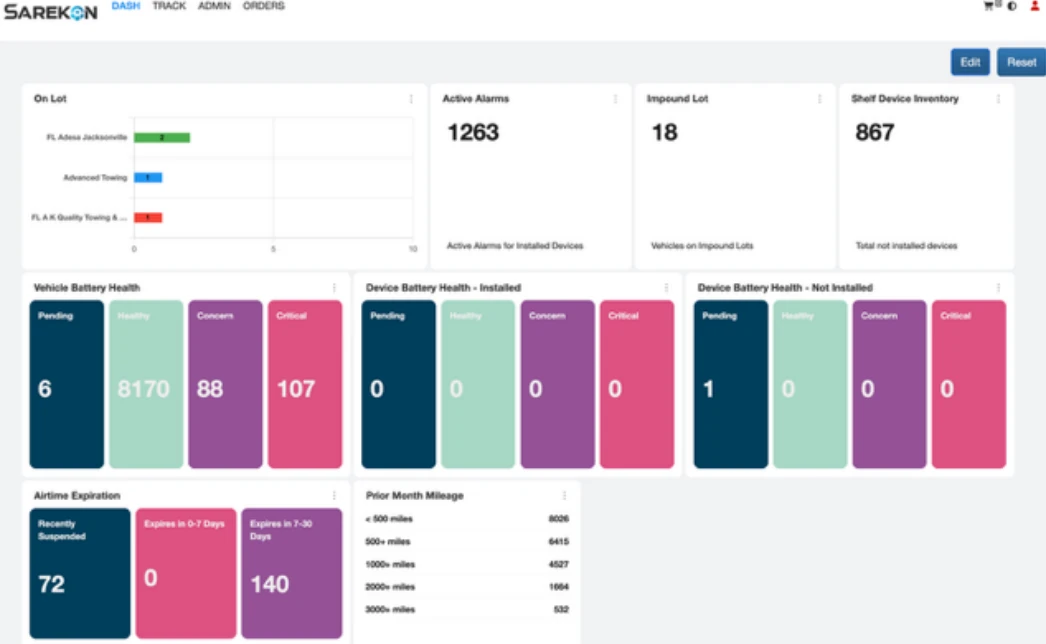
Sarekon’s BHPH Dashboard helps bring that information together into a clearer view of the portfolio.
For dealerships managing hundreds or thousands of financed vehicles, that broader visibility can help teams spend less time searching through disconnected information and more time focusing on the accounts that actually need attention.
It is the difference between simply tracking vehicles and understanding what is happening with them.
Before October begins, review these areas across your portfolio:
A Q4 review does not need to be complicated. The goal is to identify blind spots now instead of discovering them when a vehicle or account already requires immediate attention.
Dealers cannot control every change that may affect a financed vehicle during Q4. They can make sure their teams have better information when something does change.
Sarekon gives BHPH dealers access to Mileage Alerts, the BHPH Dashboard, Locate On Demand, trip history, geo zones, tamper alerts, an 18,000+ impound lot database, recovery tools, and real time vehicle information designed around the realities of managing financed vehicles.
Together, these tools support a broader Connected Vehicle Intelligence strategy that helps your team see more, understand more, and make better informed decisions across the portfolio.
Identify the blind spots now, before they become problems your team has to solve later.
Schedule a complimentary portfolio visibility review with Sarekon and make sure your dealership is prepared for Q4.
When delinquency rates climb, visibility becomes one of a dealership’s most valuable assets.
Recent industry data shows that subprime auto loan delinquencies remain at some of the highest levels seen in decades, with 60-day delinquency rates approaching 7% in early 2026. As more customers struggle to stay current on their payments, BHPH dealers are under increasing pressure to protect their portfolios while maintaining strong customer relationships. (Source: Used Car News, 2026 Subprime Auto Market Report.)
For BHPH dealers, this isn’t simply a collections issue, it’s a reminder that every financed vehicle represents invested capital. Protecting that investment requires more than reacting after a missed payment. It requires operational visibility, disciplined processes, and technology that helps identify potential issues before they become costly losses.
While no GPS solution can prevent a customer from missing a payment, the right Connected Vehicle Intelligence platform can provide the visibility dealerships need to make faster, more informed decisions throughout the life of every loan.
For years, GPS was viewed primarily as a recovery tool used after a repossession or vehicle theft. Today, forward-thinking BHPH dealerships are using Connected Vehicle Intelligence every day to improve portfolio management, strengthen collections, and increase operational efficiency.
When delinquency rates are elevated, knowing where your collateral is, and having access to location history, vehicle movement, mileage, and other operational insights, can help dealerships respond with confidence instead of uncertainty.
Modern GPS technology helps dealerships:
Rather than simply reacting to problems, dealers gain the information they need to manage risk proactively.
Funding a deal isn’t the finish line, it’s the beginning of the customer relationship.
Every financed vehicle represents an ongoing investment, and every account deserves consistent oversight. As delinquency rates remain elevated, maintaining visibility into your portfolio becomes increasingly important.
Connected Vehicle Intelligence gives dealerships the confidence to verify collateral quickly, support collection efforts with accurate information, and maintain greater control over their assets throughout the loan lifecycle.
Technology alone isn’t enough, however. The best-performing dealerships combine operational visibility with consistent internal processes, regular portfolio reviews, and proactive customer engagement.
Consider a common scenario.
A customer misses a payment, but instead of immediately beginning recovery efforts, the collections team reaches out to understand the situation. Using GPS data, they quickly verify that the vehicle remains at the customer’s residence and appears to be used for commuting to work.
With better visibility, the dealership can focus on resolving the payment issue instead of spending valuable time locating collateral or initiating unnecessary recovery efforts.
While every situation is different, having accurate, real-time information allows dealerships to make better decisions and often avoid unnecessary costs.
Technology should support customer relationships, not replace them.
Many payment issues stem from temporary financial hardships, employment changes, or unexpected life events. Early communication often leads to better outcomes than waiting until an account becomes seriously delinquent.
Operational visibility gives collection teams better information before making that first call. Instead of relying on assumptions, they can have more informed conversations, respond more appropriately to each situation, and focus on helping customers stay on track whenever possible.
The objective isn’t to recover more vehicles.
The objective is to help more customers successfully complete their loans while protecting the dealership’s investment.
One of the biggest hidden costs for many dealerships isn’t repossession, it’s operational inefficiency.
Employees spend valuable time locating vehicles, verifying inventory, coordinating collections, and responding to unexpected situations. Without accurate, real-time visibility, these everyday tasks consume resources that could be spent serving customers or growing the business.
A Connected Vehicle Intelligence platform should help your dealership:
In today’s BHPH environment, operational visibility isn’t simply a convenience, it’s becoming a competitive advantage.
At Sarekon, we believe GPS should do much more than help recover vehicles after something goes wrong.
Our Connected Vehicle Intelligence platform is designed to give independent dealerships greater visibility, control, and confidence across their entire portfolio. With real-time vehicle location, movement history, mileage reporting, customizable alerts, and operational dashboards, dealers gain actionable insights that support smarter day-to-day decisions, not just recovery efforts.
For more than 25 years, Sarekon has helped dealerships across North America improve operational efficiency, protect invested capital, and respond more quickly when exceptions occur, whether that’s a missed payment, unexpected vehicle movement, or potential theft.
Because better visibility doesn’t just protect vehicles, it helps protect profitability.
Delinquency rates may remain elevated, but they don’t have to determine your dealership’s success.
The dealerships that perform best in today’s BHPH market aren’t simply reacting to problems, they’re combining disciplined processes with Connected Vehicle Intelligence to improve collections, reduce operational waste, and protect every financed asset.
GPS is no longer just a recovery tool.
It’s an operational tool that provides the visibility needed to manage your portfolio more effectively, improve customer outcomes, and strengthen your bottom line.
Is your current GPS solution giving you the operational visibility your dealership needs, or is it only helping after a problem occurs?
Schedule a Portfolio Visibility Review with Sarekon and discover how improved operational visibility can help reduce recovery costs, improve collections, protect your inventory, and strengthen your dealership’s bottom line.
Learn more at www.sarekon.com or call 888-726-3511 to speak with a Sarekon specialist.
The best BHPH dealerships don’t just track vehicles, they use Connected Vehicle Intelligence to improve operations, strengthen collections, and protect their portfolio every day.
Knowing where a vehicle is will always be important. But location alone doesn’t tell the whole story.
Modern Connected Vehicle Intelligence platforms can provide far more than a pin on a map. They give dealerships operational visibility into financed vehicles, helping managers identify issues earlier, reduce manual work, support collection efforts, and make faster, more informed decisions.
Instead of only asking, “Where is the vehicle?” dealerships should also be asking:
When GPS becomes part of your dealership’s daily workflow, it becomes much more than a tracking device. It becomes an operational tool.
Many dealerships invest in GPS technology but only use a fraction of the capabilities available to them.
That can mean valuable information is sitting inside the platform without being incorporated into daily operations.
Take a few minutes to evaluate how your team is using your current system.
Ask yourself:
If the answer to several of these questions is “no,” there may be more operational value available from your GPS investment than your dealership is currently realizing.
Not every financed vehicle is driven the same way.
Some customers may use their vehicles for rideshare services, delivery work, business travel, or other activities that result in significantly higher mileage.
Those uses aren’t necessarily a problem, but excessive mileage can accelerate wear and tear and potentially affect the value of the dealership’s collateral.
Mileage reporting and alerts can provide greater visibility into unusually high vehicle usage, allowing managers to identify patterns and make informed decisions when appropriate.
Instead of discovering significant mileage changes months later, dealerships can maintain better visibility throughout the life of the loan.
That is an important distinction between basic GPS tracking and Connected Vehicle Intelligence: the value isn’t simply knowing where a vehicle is, it’s understanding what the data can tell you about your portfolio.
Consider a common BHPH scenario.
A customer’s account becomes delinquent, and the collections team needs to determine the appropriate next step. Instead of immediately spending time locating the vehicle or initiating recovery activity, the team reviews available vehicle information.
The dashboard shows a recent location, consistent vehicle activity, and current mileage information. With better visibility into the situation, the collections team can focus first on contacting the customer and resolving the payment issue.
In another situation, an alert or unexpected change in vehicle activity could indicate that the account deserves faster attention.
The technology doesn’t make the decision for the dealership.
It gives the dealership better information to make that decision.
That can help teams avoid unnecessary work, prioritize resources more effectively, and respond more quickly when action truly is required.
Connected Vehicle Intelligence is only valuable when devices can reliably communicate.
For BHPH dealerships serving customers who routinely travel across cities, states, or broader geographic areas, dependable connectivity is an important part of maintaining vehicle visibility.
Sarekon utilizes tier-one cellular carrier connectivity to help maintain reliable communication as vehicles travel throughout the United States and across borders.
That connectivity helps provide dealerships with timely vehicle information when they need it.
But reliable technology is only part of the equation.
Sarekon also backs its technology with U.S.-based, 24/7 customer support. Whether your team has a question about a device, needs assistance navigating the platform, or requires support during a recovery situation, knowledgeable help is available when it matters.
Reliable technology matters. Having reliable people behind that technology matters just as much.
The best recovery process often begins well before a vehicle needs to be recovered.
Preparation matters.
Current vehicle information, documented procedures, dependable reporting, and clear internal responsibilities can help dealerships respond more efficiently when an account changes.
Sarekon also provides access to a nationwide network of more than 18,000 tow lots, giving dealerships another resource when coordinating recovery efforts across a broad geographic area.
No GPS provider can guarantee a recovery outcome. But accurate information, reliable connectivity, established dealership processes, and access to recovery resources can help reduce unnecessary delays when action is required.
One of the biggest benefits of a strong Connected Vehicle Intelligence platform isn’t just asset protection.
It’s efficiency.
Employees shouldn’t have to spend valuable time searching for vehicles, switching between disconnected systems, manually updating spreadsheets, or tracking down information from multiple departments.
The right platform can help support:
When employees spend less time searching for information, they can spend more time working with customers, managing accounts, and growing the business.
Your dealership changes.
Your portfolio changes.
And the technology available to support your business continues to evolve.
That makes it worthwhile to periodically evaluate whether your current GPS solution is delivering the operational value you expect.
Ask yourself:
If those questions are difficult to answer, your dealership may benefit from taking a closer look at its current GPS strategy.
At Sarekon, we believe dealerships deserve more than basic vehicle tracking.
Our approach to Connected Vehicle Intelligence is designed around the way dealers actually operate, helping teams protect financed assets, improve operational visibility, support collections, and make better-informed decisions throughout the life of every vehicle.
Sarekon brings more than 25 years of automotive industry experience, with millions of GPS devices deployed and technology trusted by dealerships across North America.
Our dealer-focused capabilities include real-time vehicle location, vehicle history, mileage reporting, customizable dashboards, operational alerts, dependable cellular connectivity, recovery resources, and U.S.-based 24/7 support.
The goal isn’t simply to provide more data.
It’s to provide dealerships with useful information they can act on.
Because technology alone doesn’t solve operational challenges. The right technology, combined with disciplined processes and dependable support, can help your team operate with greater visibility, control, and confidence.
GPS and Connected Vehicle Intelligence should always be used in accordance with applicable federal, state, and local laws, financing agreements, customer disclosures, privacy requirements, and dealership policies.
Location information and related vehicle data should be accessed only by authorized personnel and used as part of responsible, compliant asset management and collection practices.
Most BHPH dealerships already use GPS.
The bigger question is: Are you getting everything you should from it?
The dealerships that generate the greatest value from their technology aren’t only using GPS when a vehicle needs to be located or recovered. They’re using Connected Vehicle Intelligence throughout the customer and vehicle lifecycle to improve visibility, monitor vehicle activity, support collections, streamline recovery workflows, and make more informed business decisions.
Your GPS investment should help your dealership work smarter every day, not simply tell you where a vehicle is after something goes wrong.
Schedule a complimentary GPS Platform Review with Sarekon to see whether your dealership is maximizing the features, visibility, and operational value of its current solution.
We’ll help you evaluate how your current GPS asset protection strategy supports your collections process, portfolio visibility, recovery operations, and overall dealership efficiency, and identify opportunities to get more value from the technology you’re already using.
Discover how better Connected Vehicle Intelligence can help improve operational visibility, reduce unnecessary recovery costs, strengthen asset protection, and protect your dealership’s bottom line.
Visit www.sarekon.com or call 888-726-3511 to start your GPS Platform Review.
Every financed vehicle tells a story, and mileage is one of the most important chapters.
For Buy Here Pay Here dealerships, every vehicle is more than transportation for a customer. It’s an asset that represents invested capital. While most dealers focus on knowing where their vehicles are, another question deserves just as much attention:
How are they being used?
A customer may be making payments, communicating with your team, and driving responsibly. At the same time, that vehicle could be accumulating thousands of unexpected miles through rideshare driving, delivery work, or an extended commute.
By the time the vehicle returns to your dealership, requires recovery, or is traded in, the additional mileage may have already accelerated depreciation, increased wear and tear, and reduced the value of your collateral.
The good news is that it doesn’t have to be a surprise.
Today’s drivers use their vehicles differently than they did just a few years ago.
Many customers supplement their income by driving for rideshare services like Uber or Lyft, delivering food or packages, or taking on other gig economy jobs. Others simply have longer commutes or spend more time on the road for work.
There’s nothing inherently wrong with those uses.
However, from a dealership’s perspective, significantly higher-than-expected mileage can accelerate depreciation and increase wear on one of your most valuable business assets.
The question isn’t whether customers should drive their vehicles.
The question is whether your dealership has the visibility to recognize when vehicle usage changes dramatically.
Imagine a customer who starts driving for Uber on weekends.
They may add an extra 700 to 1,000 miles every week without the dealership ever knowing.
Over the course of a year, that could mean 35,000 to 50,000 additional miles beyond normal driving habits.
The vehicle may still be making payments.
The customer may still be communicating with your team.
Yet the value of that collateral could be changing much faster than expected.
Without mileage monitoring, that shift remains largely invisible.
Mileage reports tell you what has happened.
Mileage alerts tell you when something has changed.
Instead of waiting until a vehicle has accumulated excessive mileage, your dealership can receive notifications when usage exceeds thresholds you’ve established.
That doesn’t mean every alert requires action.
It simply gives your team the information needed to ask the right questions and make informed decisions.
For example:
The alert isn’t the conclusion.
It’s the beginning of a better-informed conversation.
Traditional GPS answers one question:
Where is the vehicle?
Connected Vehicle Intelligence helps answer much more.
It provides operational visibility into how vehicles are being used, allowing dealerships to better understand changes across their portfolio, not just vehicle location.
With tools like mileage reporting, notifications, vehicle history, movement data, and operational dashboards, dealerships can identify trends earlier and respond more effectively.
That’s the difference between simply tracking vehicles and actively managing a portfolio.
Consider a common scenario.
A dealership notices that one financed vehicle has accumulated substantially more mileage than similar accounts.
Because the team receives an alert early, they review the account, contact the customer, and learn the vehicle is now being used for rideshare work.
The dealership now has current information that helps them better understand the account and manage the relationship appropriately.
Without that visibility, the dealership may not have discovered the additional mileage until months later, after significant depreciation had already occurred.
Technology doesn’t replace judgment.
It provides the information needed to make better decisions.
At Sarekon, we believe dealerships deserve more than basic GPS tracking.
Our Connected Vehicle Intelligence platform helps BHPH dealers gain greater operational visibility with tools designed specifically for dealership operations—including mileage reporting, customizable mileage alerts, real-time vehicle location, operational dashboards, and dealer-focused reporting.
For more than 25 years, Sarekon has helped dealerships across North America improve visibility, protect financed assets, and operate more efficiently. Our technology is backed by dependable U.S.-based support and built around the challenges dealers face every day.
Because protecting your portfolio starts with knowing more than where your vehicles are.
It starts with understanding how they’re being used.
Excessive mileage doesn’t happen overnight.
It happens one trip at a time.
The sooner your dealership becomes aware of significant changes in vehicle usage, the more informed your decisions can be.
Mileage alerts won’t stop customers from driving.
But they can help ensure that changes in vehicle usage don’t remain hidden until they become expensive surprises.
Are you getting meaningful mileage insights from your current GPS solution, or are you only finding out about excessive mileage after the fact?
Schedule a complimentary GPS Platform Review with Sarekon and discover how Connected Vehicle Intelligence can help your dealership monitor vehicle usage, improve operational visibility, protect collateral value, and get more from every financed vehicle.
Visit www.sarekon.com or call 888-726-3511 to learn how Sarekon can help your dealership turn vehicle data into better business decisions.
Summer is one of the busiest times of year for Buy Here Pay Here dealerships. Customers travel more, vehicles move farther from normal routines, schedules become less predictable, and dealerships are often balancing sales, collections, service, inventory, and recovery activity all at once.
That extra movement can create new portfolio pressure.
A vehicle that stayed close to home in March may be hundreds of miles away in June. A customer may be driving more for seasonal work, vacations, family trips, or summer obligations. Higher mileage, unfamiliar parking locations, longer trips, and changing routines can make financed vehicles harder to monitor if your dealership is relying on outdated information.
For BHPH dealers, summer is not just a busy season. It is a season where account behavior, vehicle movement, and operational pressure can shift quickly.
That is why now is a smart time to review your portfolio before small issues become expensive ones.
A mid-year review often focuses on numbers: sales, delinquencies, recoveries, and portfolio performance. A summer portfolio review should go one step further and ask how seasonal movement is affecting your financed vehicles.
Customers may be traveling out of state, parking in unfamiliar areas, using vehicles more frequently, or driving longer distances than usual. At the same time, summer expenses can put pressure on household budgets. Vacations, fuel costs, childcare, and back-to-school planning can all affect payment behavior as the season progresses.
This does not mean every account becomes high risk. It means dealerships need clear information and a process that helps the team spot issues early.
If a customer misses a payment, a vehicle stops reporting, or a unit moves outside its normal area, your team should not be starting from scratch. Summer is the time to make sure your tools, contacts, alerts, and account notes are ready before the problem grows.
Phone calls, customer notes, payment history, and spreadsheets all have a place in BHPH operations. But during a high-movement season, manual tracking can fall behind quickly.
A staff member may know where a vehicle was assigned, but not where it is now. A note may say a customer is local, but the vehicle may be moving through another city or state. A device may stop reporting, but the issue may not be noticed until the account already needs attention.
That delay creates unnecessary work. Staff spend more time chasing updates, confirming details, and trying to understand what changed. Recovery partners may need better information. Managers may have to make decisions with incomplete data.
Summer does not create every portfolio problem, but it can expose weak processes quickly.
Summer also brings added theft exposure. Vehicles are often parked at hotels, events, shopping centers, job locations, public lots, and vacation destinations. Dealership inventory, demos, service vehicles, and financed units may be moving more often or sitting in less familiar places.
The National Highway Traffic Safety Administration notes that summer is the worst season for vehicle theft and identifies July as National Vehicle Theft Prevention Month. NHTSA also reported that more than 650,000 vehicles were stolen in the United States in 2025. That makes summer an important time for dealerships to review how quickly they can locate vehicles and respond when something looks unusual.
For BHPH dealers, theft risk is only one part of the issue. A missing or hard-to-locate vehicle can affect collections, recovery costs, staff time, insurance activity, and portfolio performance. The faster your team can access accurate information, the better prepared you are to respond.
A summer portfolio review does not need to be complicated. It should focus on the areas most likely to create delays during a busy season.
Start with non-reporting devices. Review which GPS units have stopped communicating, which devices are reporting inconsistently, and whether inactive devices are being flagged quickly. A device that is not reporting should not go unnoticed until the account becomes urgent.
Next, look at travel patterns. Identify accounts where vehicles are moving farther than usual, spending time outside expected areas, or showing changes in normal activity. Seasonal travel is not automatically a problem, but unusual movement can help your team decide which accounts need closer attention.
Review geofence settings and alerts. Make sure key dealership locations, storage areas, recovery zones, and high-priority locations are set up correctly. Confirm that alerts are going to the right people and that employees know what to do when an alert comes through.
Check recovery contacts and escalation steps. If a vehicle becomes difficult to locate, your team should know who to contact, what information to collect, and how to move the process forward. Outdated contacts or unclear procedures can slow everything down.
Review customer communication. Make sure account notes, phone numbers, addresses, payment arrangements, and recent conversations are current. Summer schedules can change quickly, so strong communication records can help teams avoid confusion.
Finally, identify high-risk accounts before they require urgent action. Look at missed payments, broken promises, non-reporting devices, unusual movement, and accounts that are taking more staff time than expected. The goal is to prioritize attention before small problems turn into larger recovery challenges.
A strong GPS strategy gives BHPH dealers more than a location point. It gives teams a clearer picture of what is happening with financed vehicles during a season when movement is less predictable.
Real-time GPS information, trip history, geofence alerts, tow alerts, tamper alerts, and device reporting can help dealerships identify issues sooner and reduce time spent searching for answers. Instead of waiting until an account becomes difficult to manage, teams can review activity, confirm vehicle status, and respond with better context.
That does not replace good collections practices or customer communication. It strengthens them.
When your team has accurate information, it can prioritize accounts more effectively, communicate with customers more clearly, and coordinate recovery activity with less guesswork.
Sarekon helps BHPH dealers manage financed vehicles with GPS solutions designed for real dealership operations.
During busy summer months, Sarekon gives authorized teams access to real-time vehicle information, location on demand, trip history, geofencing, tow alerts, tamper alerts, and reporting tools that help reduce blind spots across the portfolio.
For account management, Sarekon helps dealers better understand where financed vehicles are and how activity may be changing. For recovery workflows, Sarekon helps teams provide more accurate information when a unit becomes difficult to locate. For daily operations, Sarekon helps reduce the time spent searching for vehicle updates and gives teams a more dependable way to monitor assets.
Sarekon is built to help dealers stay organized during high-movement seasons without adding unnecessary complexity or inflated costs.
Summer can be a strong season for dealerships, but it can also create added pressure across the portfolio. More travel, more movement, changing customer schedules, and higher theft exposure can make small gaps harder to manage.
Now is the time to review your GPS strategy, device reporting, customer communication, geofence alerts, recovery contacts, and high-risk accounts.
If your dealership is not confident in its current process, Sarekon can help you take a closer look.
Schedule a summer portfolio visibility review with Sarekon to evaluate your current GPS strategy and identify where stronger real-time tracking can support your BHPH operation.
Simple source note: NHTSA identifies July as National Vehicle Theft Prevention Month, states that summer is the worst season for vehicle theft, and reports that more than 650,000 vehicles were stolen in the United States in 2025. (Source: NHTSA, Vehicle Theft Prevention.)
The first six months of the year are behind you. For Buy Here Pay Here dealerships, that makes this the right time to step back, review performance, and make the operational adjustments that can shape the rest of the year.
This is not just a visibility check. It is a business check.
By mid-year, your dealership has enough activity to see what is working and what needs attention. Sales patterns are clearer. Portfolio behavior is easier to evaluate. Staff workflows have been tested. Inventory movement has exposed strengths and weaknesses. Your technology, collections process, and recovery strategy have either supported your team or slowed it down.
The second half of the year can bring strong opportunities, but it can also bring more pressure. Delinquency trends may shift. Inventory needs may change. Recovery activity may increase. Small inefficiencies that seemed manageable in the spring can become expensive by year-end.
A mid-year review does not need to be complicated. A few focused improvements now can help your dealership operate more efficiently, protect portfolio performance, and finish the year with stronger control.
Here are five mid-year moves every BHPH dealer should make.
Sales matter, but they do not tell the full story.
A dealership can have a strong first half in units sold and still face growing pressure inside the portfolio. That is why mid-year is the right time to look beyond vehicle sales and evaluate account performance, payment behavior, collections activity, charge-offs, recovery volume, and customer communication.
Ask what the first half of the year is telling you. Are certain deal structures creating more issues than expected? Are late payments increasing in specific customer segments? Are some accounts requiring too much staff time? Are recoveries becoming more frequent or more difficult to manage?
This review helps your dealership identify patterns before they become bigger problems. It also gives leadership a clearer view of where adjustments may be needed in underwriting, down payment requirements, payment scheduling, customer follow-up, or account management.
The goal is not to react to every issue individually. The goal is to understand what your portfolio is showing you and use that information to make smarter decisions for the second half of the year.
Mid-year is the perfect time to clean up the details that keep your operation running smoothly.
In BHPH, small recordkeeping issues can create major delays later. A vehicle assigned to the wrong account, an outdated customer contact, an inactive GPS device, missing notes, incomplete recovery documentation, or unclear vehicle status can slow down collections and create confusion across departments.
Your team should review whether account records are accurate, whether financed vehicles are properly assigned, whether GPS devices are linked to the correct units, and whether important account notes are clear and current.
Clean records make every department stronger. Collections can work faster. Managers can make better decisions. Recovery partners can receive better information. Staff members can avoid wasting time trying to piece together details that should already be available.
This is not the most exciting part of dealership operations, but it is one of the most important. Clean data creates cleaner workflows.
Collections should not only become active when an account is already high risk.
A strong mid-year review should look at how early your team is identifying payment issues, how consistently staff members are communicating with customers, and whether your process gives employees the information they need to take the right next step.
Review your communication cadence, payment reminder process, escalation steps, and internal handoffs. Are customers being contacted early enough? Are promises to pay being tracked clearly? Are staff members following a consistent process? Are managers able to identify which accounts need attention before they become harder to resolve?
The second half of the year can bring new financial pressure for customers, including travel costs, back-to-school expenses, seasonal work changes, and other budget shifts. Dealers who tighten collections early can reduce stress later.
The goal is not to make collections more aggressive. The goal is to make the process more organized, consistent, and proactive.
A profitable BHPH dealership depends on more than sales and collections. Daily operations matter.
Vehicles move between sales, service, detail, reconditioning, storage, demos, test drives, customer appointments, and recovery status. Staff members move between customer calls, payment follow-up, vehicle questions, paperwork, and lot activity. When processes are unclear, small delays add up quickly.
Mid-year is a good time to ask where your team is losing time. Are employees searching for vehicles too often? Are departments communicating clearly? Are service and recon updates easy to access? Are sales and collections teams aligned? Are managers spending too much time chasing information that should be simple to find?
Improving daily operations does not always require a major system change. Sometimes it means tightening handoffs between departments, creating clearer vehicle status procedures, reducing duplicate work, or making sure the right people have access to the right information.
The more efficient your dealership runs, the easier it becomes to serve customers, manage accounts, and protect profitability.
Technology should help your dealership move faster, not add more friction.
If your current GPS provider, reporting tools, or internal systems are difficult to use, slow to update, or no longer aligned with how your dealership operates, the second half of the year is the right time to reevaluate them.
Your technology should help your team manage financed vehicles, support collections, organize recovery activity, monitor inventory, and reduce unnecessary manual work. It should give staff reliable information without forcing them through complicated processes.
For BHPH dealers, the right GPS partner should understand financed vehicle management, dealer workflows, and recovery needs. Generic tracking is not enough. Your dealership needs tools built around the realities of portfolio protection and day-to-day dealer operations.
If your technology is creating more work, costing too much, or failing to give your team the information it needs, it may be time to consider a better fit.
Sarekon helps Buy Here Pay Here dealerships manage financed vehicles with GPS solutions built for real dealer operations.
For day-to-day account management, Sarekon gives authorized teams access to real-time vehicle information, trip history, and tools that help reduce guesswork. For recovery workflows, Sarekon supports faster coordination by helping dealers provide more accurate location data when a vehicle becomes difficult to locate. For daily operations, Sarekon helps dealerships monitor vehicles, organize assets, and reduce time wasted searching for information.
Sarekon is designed to support the full life of the financed vehicle, from the moment it leaves the lot through account management, collections, and recovery. Dealers get reliable hardware, dealer-focused tools, and pricing built to make sense for BHPH operations.
GPS technology does not replace strong processes, smart collections, or good customer relationships. It makes those efforts stronger by giving your team better information when decisions need to be made.
The second half of the year is not something to wait for. It is something to prepare for.
BHPH dealers that use mid-year as a reset point can enter the next six months with cleaner records, stronger collections, better workflows, improved technology, and a clearer understanding of portfolio performance.
This blog is not just about visibility. It is about running a tighter dealership.
When your team has better processes, better information, and better tools, the entire operation becomes more efficient. Small improvements made now can create a meaningful difference before year-end.
If your dealership is reviewing portfolio performance, collections processes, recovery workflows, GPS technology, or day-to-day operations, now is the time to take a closer look.
Schedule a mid-year portfolio review with Sarekon to evaluate your current GPS strategy and see how real-time tracking can help your BHPH dealership manage financed vehicles, support recovery workflows, and operate with greater confidence in the second half of the year.
Every July, National Vehicle Theft Prevention Month serves as an important reminder that protecting vehicles requires more than locks, cameras, and good intentions.
For dealerships and Buy Here Pay Here operators, it is also a valuable opportunity to evaluate the systems, processes, and technology used to protect inventory, financed vehicles, and mobile assets throughout the year.
Vehicle theft continues to impact businesses across the country, and summer consistently brings higher theft activity. More travel, increased vehicle movement, longer daylight hours, and busier dealership operations can create more opportunities for vehicles to be misplaced, stolen, or become harder to recover.
While no technology can eliminate theft, real-time GPS tracking can help dealerships act faster, make better decisions, and maintain stronger control over the vehicles they manage.
National Vehicle Theft Prevention Month is more than an awareness campaign. For dealerships, it is a practical reminder to evaluate how well vehicles are being monitored, protected, and accounted for.
Every unit on the lot represents inventory and revenue. Every financed BHPH vehicle remains tied to portfolio performance. When a vehicle cannot be located quickly, the issue can affect sales, collections, recovery costs, team productivity, and customer trust.
That is why July is a strong time to look beyond physical security and ask a bigger question: does your team have the visibility needed to respond when something unexpected happens?
The stronger your location intelligence, the better prepared your dealership is to protect inventory, support recovery efforts, and reduce operational blind spots.
One of the simplest ways to strengthen dealership operations is to confirm that every vehicle can be located quickly.
For many dealerships, inventory moves constantly. Vehicles may shift between the front lot, overflow areas, service, recon, detail, demo use, auctions, storage, and off-site locations. If those movements are not tracked accurately, teams can waste valuable time searching for vehicles or relying on outdated records.
A July inventory check should focus on how quickly your team can locate every unit and whether your GPS devices are reporting consistently. Management should also have a clear view of where vehicles are located across all active areas, not just the main lot.
If finding a vehicle takes too long, or if your records do not match where units actually are, it may be time to reevaluate your current tracking process.
Even with strong security practices, vehicles can still go missing or become difficult to locate. When that happens, response speed matters.
Dealerships should review whether their team has a documented recovery process, whether managers can quickly access location information, and whether recovery partners receive accurate details when needed. Employees should also know who to contact, what information to gather, and how to escalate an issue when a vehicle cannot be located.
Preparation before an incident often leads to better outcomes afterward. A recovery workflow should not be created in the middle of a stressful situation. It should already be clear, tested, and easy for the team to follow.
For BHPH operations, this is especially important. When a financed vehicle becomes harder to locate, delayed action can increase exposure and create unnecessary pressure on collections and recovery teams.
GPS technology has changed significantly over the past decade. If your dealership is relying on outdated hardware, limited reporting, delayed location updates, or a platform that slows your team down, July is a good time to ask whether your current solution still fits your operation.
Modern GPS asset protection should support real-time vehicle visibility, reliable reporting, movement alerts, tamper alerts, historical trip information, dealer-friendly dashboards, and tools that help teams manage recovery activity with less guesswork.
The goal is not more complexity. The goal is faster access to the information your team needs.
A strong GPS solution should help dealership staff locate vehicles quickly, identify unusual movement, monitor financed assets, and support recovery partners with better data. If your current provider does not help your team work faster and smarter, it may be costing you more than the monthly service fee.
Vehicle theft risk is not limited to the front line of inventory.
Dealerships should pay close attention to overflow lots, service and recon areas, storage facilities, employee parking areas, overnight holding areas, off-site inventory locations, and any place vehicles may sit with less visibility.
These areas can become blind spots when they are not monitored consistently. A vehicle that is technically “on property” may still be hard to find if it is sitting in an overflow area, blocked behind other units, or moved without an update. A vehicle stored off-site may carry even more exposure if the team does not have real-time location access.
Understanding where vehicles spend the most time can help dealerships strengthen their procedures before a small gap becomes a larger loss.
Alerts are only useful when they reach the right people and trigger the right response.
Dealerships should review notification settings for movement, towing, tampering, and unexpected activity. It is also important to confirm that alerts are being sent to active team members, not outdated contacts or inboxes that no one checks after hours.
A missed alert provides little value. A clear response process can make alerts far more effective.
When the right people receive the right information quickly, your team can investigate faster, contact the appropriate parties, and support recovery activity with more confidence.
At Sarekon, we understand that dealerships and BHPH operators need more than basic vehicle tracking. They need reliable GPS visibility that supports inventory control, collections, asset protection, and recovery workflows.
Sarekon GPS solutions help dealers monitor vehicles in real time, locate units faster, review trip history, set geofences, receive movement and tamper-related alerts, and support recovery efforts with more accurate location data.
For dealership teams, that means less time searching, fewer blind spots across lots and off-site locations, and faster access to the information needed when a vehicle moves unexpectedly. For BHPH operators, it means stronger visibility into financed assets and better support when a unit becomes difficult to locate.
Sarekon is built to help dealers act faster, protect smarter, and manage their vehicle assets with greater confidence.
GPS technology is not a replacement for strong dealership processes. It is a tool that makes those processes more effective.
GPS technology should always be used in accordance with applicable laws, financing agreements, customer disclosures, privacy requirements, and dealership policies.
Dealerships should establish clear internal procedures for monitoring vehicles, responding to alerts, accessing location information, and managing recovery activity. Responsible use protects the business, supports compliance, and helps ensure GPS tools are used appropriately.
National Vehicle Theft Prevention Month is an opportunity to evaluate more than physical security. It is a chance to review how your dealership manages vehicle visibility, protects inventory, and prepares for the unexpected.
As theft risks continue to evolve, dealerships with accurate, real-time information are better positioned to respond quickly and make informed decisions.
If your dealership has not reviewed its GPS asset protection strategy this year, July is the right time to start.
Whether you manage dealership inventory, a BHPH portfolio, financed assets, or vehicles across multiple locations, Sarekon can help you evaluate your current GPS strategy and identify where visibility gaps may exist.
Schedule a visibility review with Sarekon today to see how real-time GPS tracking can support inventory control, recovery workflows, and smarter asset protection for your dealership.
Source note: NHTSA identifies July as National Vehicle Theft Prevention Month and states that summer is the worst season for vehicle theft. NHTSA also reports that more than 650,000 vehicles were stolen in the United States in 2025. (Source: NHTSA, Vehicle Theft Prevention.)


